
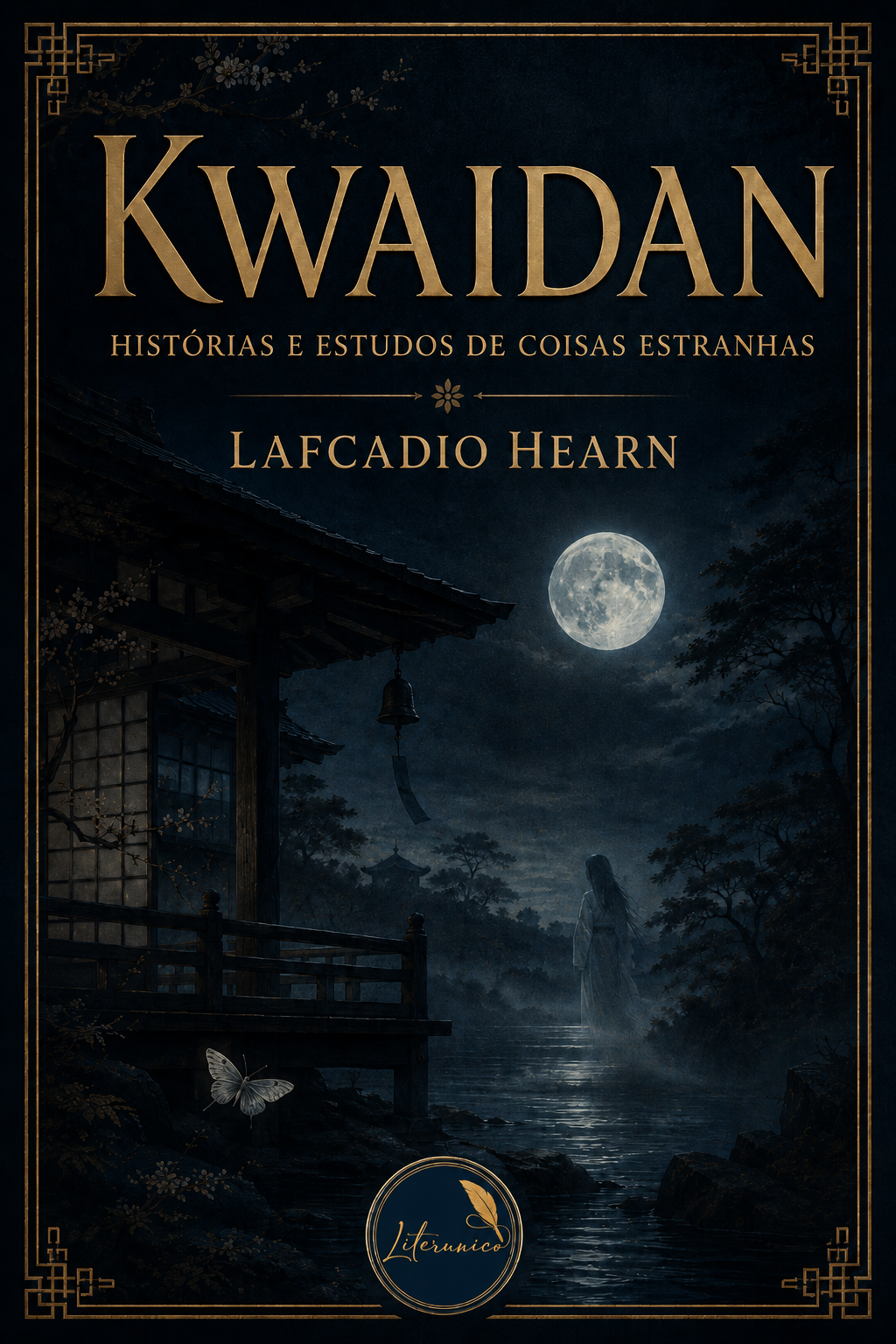
Universo da obra
Universo da obra
[1] See my _Kottō_, for a description of these curious crabs.
[2] Or, Shimonoséki. The town is also known by the name of Bakkan.
[3] The _biwa_, a kind of four-stringed lute, is chiefly used in
musical recitative. Formerly the professional minstrels who recited
the _Heiké-Monogatari_, and other tragical histories, were called
_biwa-hōshi_, or “lute-priests.” The origin of this appellation is not
clear; but it is possible that it may have been suggested by the fact
that “lute-priests” as well as blind shampooers, had their heads
shaven, like Buddhist priests. The _biwa_ is played with a kind of
plectrum, called _bachi_, usually made of horn.
(1) A response to show that one has heard and is listening attentively.
[4] A respectful term, signifying the opening of a gate. It was used
by samurai when calling to the guards on duty at a lord’s gate for
admission.
[5] Or the phrase might be rendered, “for the pity of that part is the
deepest.” The Japanese word for pity in the original text is
“_awaré_.”
[6] “Traveling incognito” is at least the meaning of the original
phrase,—“making a disguised august-journey” (_shinobi no go-ryokō_).
[7] The Smaller Pragña-Pâramitâ-Hridaya-Sûtra is thus called in
Japanese. Both the smaller and larger sûtras called Pragña-Pâramitâ
(“Transcendent Wisdom”) have been translated by the late Professor Max
Müller, and can be found in volume xlix. of the _Sacred Books of the
East_ (“Buddhist Mahayana Sûtras”).—Apropos of the magical use of the
text, as described in this story, it is worth remarking that the
subject of the sûtra is the Doctrine of the Emptiness of Forms,—that
is to say, of the unreal character of all phenomena or noumena...
“Form is emptiness; and emptiness is form. Emptiness is not different
from form; form is not different from emptiness. What is form—that is
emptiness. What is emptiness—that is form... Perception, name,
concept, and knowledge, are also emptiness... There is no eye, ear,
nose, tongue, body, and mind... But when the envelopment of
consciousness has been annihilated, then he [_the seeker_] becomes
free from all fear, and beyond the reach of change, enjoying final
Nirvana.”
Texto original em EN preservado no Literunico para leitura comparada com a edição/tradução da Copa Literunico. Fonte-base: https://www.gutenberg.org/cache/epub/1210/pg1210.txt
Ainda não há resenhas para esta obra. A primeira leitura comentada pode começar aqui.
Escolha a arte, confira a disponibilidade e adicione o produto ao carrinho sem sair da experiência.
Adquira Relíquias da Obra e deixe sua marca registrada, criando valor ao item!

Capa frontal, contracapa, Capa Aberta e Marca-Páginas pertencem à obra e acompanham este Universes.
Escolha uma Relíquia no painel principal para enviar uma proposta ao autor.
Capítulos disponíveis para continuar a leitura.
Nenhuma Relíquia desta obra foi adquirida ainda. Seja o primeiro a eternizar seu nome no acervo oficial!
Conhecer as 100 RelíquiasAinda não há resenhas para esta obra. A primeira leitura comentada pode começar aqui.
Nenhuma posse foi registrada publicamente para esta edição.
Durante a leitura, abra Menu para ajustar a experiência sem sair do capítulo. As preferências de aparência ficam salvas neste aparelho.
Recursos identificados como “em preparo” aparecem para antecipar a evolução do leitor, mas ainda não executam uma ação.
Posso mostrar leituras em destaque, clássicos e Relíquias disponíveis agora no Literúnico.
Escolha um caminho
Dúvidas desta página
As explicações do Aurélio são respostas cadastradas pelo Literúnico.